
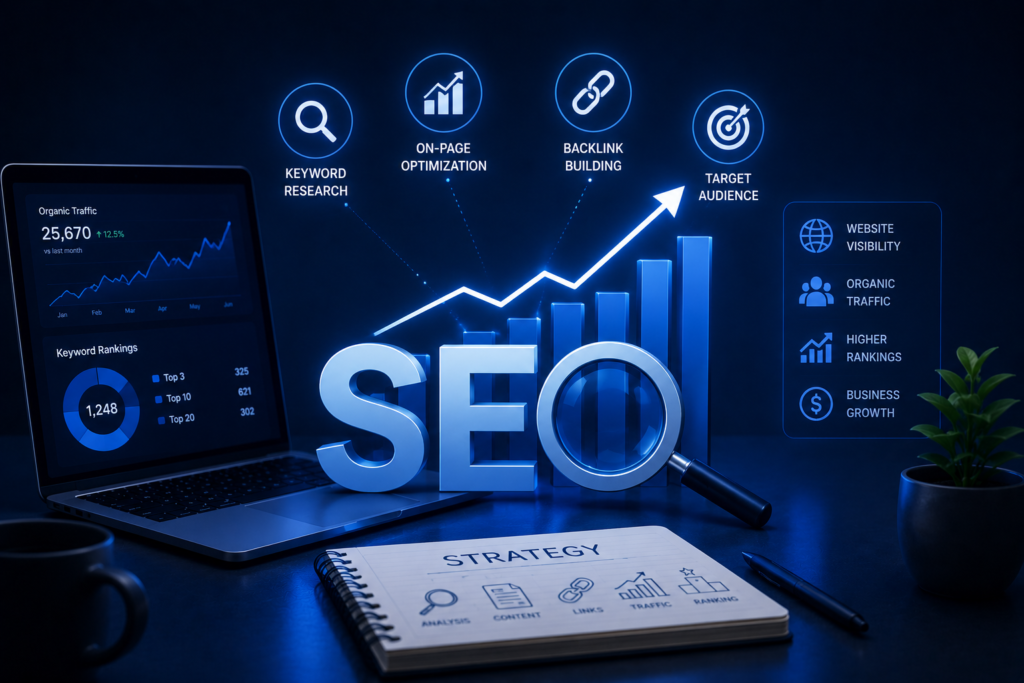
SEO Tips For Beginners
In today’s digital world, having a website is no longer enough to ensure business success. Every day, millions of websites vie for users’ attention, making it difficult for companies to stand out online. Whether you run a small local business, an e-commerce store, or a large corporation, your potential customers are likely searching online before making a purchase decision. If your website does not appear in search results, you may miss valuable opportunities to attract new customers.
Search Engine Optimization (SEO) becomes crucial in this situation. The technique of making a website more visible on search engines like Google is known as SEO. It helps businesses attract organic traffic, increase brand awareness, and reach people actively searching for their products or services. SEO is often considered the foundation of online success because it creates a strong digital presence that supports long-term growth and sustainable results.
SEO Tips For Beginners
Search Engine Optimization (SEO) refers to the practice of optimizing websites and online content to improve their ranking on search engine results pages (SERPs).
The primary goal of SEO is to help search engines understand your website while making it more useful and relevant to users.
SEO involves several elements, including:
- Keyword Research
- Content Optimization
- Technical SEO
- Link Building
- User Experience
- Mobile Optimization
- Website Speed
When these elements work together effectively, they help improve visibility and attract qualified visitors.
Why SEO is Important for Online Success
SEO Tips For Beginners
When searching for information, goods, or services, consumers frequently turn to search engines first.
SEO helps businesses:
- Increase website visibility
- Generate organic traffic
- Build credibility and trust
- Improve user experience
- Reach the right audience
- Increase leads and sales
- Support long-term business growth
Even the best website could struggle to attract visitors without SEO.
Benefits of SEO for Businesses
1. Increases Organic Website Traffic
SEO Tips For Beginners.
The capacity of SEO to produce organic traffic is one of its main benefits.
Organic traffic refers to visitors who find your website through unpaid search results.
Unlike paid advertisements, SEO continues to drive traffic over time without requiring continuous advertising expenses.
SEO Tips For Beginners
2. Builds Trust and Credibility
Websites that show up on the first page of search results are frequently trusted by users. High rankings signal authority and reliability.
Businesses can strengthen credibility through:
- High-quality content
- Positive user experiences
- Secure websites
- Relevant information
- Strong online reputation
Purchase decisions are heavily influenced by trust.
3. Targets the Right Audience
SEO Tips For Beginners
SEO helps businesses connect with people who are actively searching for their products or services.
Instead of reaching random audiences, SEO attracts users with specific interests and needs.
This targeted approach often results in higher conversion rates.
4. Delivers Long-Term Results
SEO Tips For Beginners
Unlike many marketing strategies that stop producing results when the budget ends, SEO provides long-term value.
For months or even years, a well-optimized website can continue to produce leads and traffic.
Because of this, SEO is among the most long-lasting expenditures in digital marketing.
5. Enhances User Experience
SEO Tips For Beginners
Websites that offer exceptional user experiences are given priority by search engines.
SEO encourages businesses to improve:
- Website navigation
- Mobile responsiveness
- Page loading speed
- Content quality
- Site structure
A better user experience leads to increased engagement and customer satisfaction.
- Key Components of SEO
- Keyword Research
The words and phrases people type into search engines are known as keywords.
Effective keyword research helps businesses understand:
What customers are searching for
- Search volume trends
- Customer intent
- Market opportunities
Choosing the right keywords helps attract relevant traffic to a website.
Content Optimization
Content is one of the most important aspects of SEO.
Businesses should create content that:
- Answers customer questions
- Provides valuable information
- Solves problems
- Addresses user intent
Examples include:
- Blog posts
- Articles
- Guides
- Case studies
FAQs
Both rankings and user engagement are enhanced by high-quality content.
Technical SEO
Technical SEO focuses on improving website performance and search engine accessibility.
Important elements include:
- Website speed
- Secure HTTPS connections
- XML sitemaps
- Mobile compatibility
- Proper indexing
A technically optimized website helps search engines crawl and understand content more effectively.
On-Page SEO
SEO Tips For Beginners
On-page SEO involves optimizing individual pages.
This includes:
- Page titles
- Meta descriptions
- Headers
- Internal links
- Image optimization
- Keyword placement
Strong on-page optimization improves relevance and search visibility.
Link Building
SEO Tips For Beginners. Links linking to your website from other websites are known as backlinks.
Backlinks are seen by search engines as indicators of authority and trust.
Quality backlinks can:
- Improve rankings
- Increase credibility
- Drive referral traffic
- Strengthen domain authority
The focus should always be on earning high-quality links rather than large quantities. SEO Tips For Beginners .Common SEO Mistakes to Avoid
- Ignoring Mobile Optimization
- Many users browse websites on smartphones.
- Rankings and user engagement might be adversely affected by a subpar mobile experience.
Using Low-Quality Content
SEO Tips For Beginners . Content created solely for search engines often performs poorly.
Businesses should focus on creating valuable and user-focused content.
Keyword Stuffing
SEO Tips For Beginners. Overusing keywords can make content difficult to read and may harm search performance.
Keywords should be used naturally.
Neglecting Website Speed
SEO Tips For Beginners. Websites that load slowly have higher bounce rates and lower user satisfaction.
Fast websites provide better experiences and stronger SEO performance.
Ignoring Analytics
SEO requires continuous monitoring and improvement.
Tracking performance helps businesses identify opportunities and make informed decisions.
How SEO Supports Business Growth
Best Freelance Digital Marketer In Kannur.SEO contributes directly to business growth by increasing visibility and attracting potential customers.
It helps businesses:
- Reach new audiences
- Generate qualified leads
- Improve brand recognition
- Increase website traffic
- Boost conversions
- Strengthen customer trust
As online competition continues to grow, SEO becomes increasingly important for maintaining a competitive advantage.
Businesses that invest in SEO often achieve stronger long-term results than those relying solely on paid advertising.
Frequently Asked Questions (FAQ) Best Freelance Digital Marketer In Kannur
- What is SEO?
SEO (Search Engine Optimization) is the process of improving a website’s visibility on search engines to attract organic traffic and increase online presence.
- Why is SEO important?
SEO helps businesses improve visibility, attract targeted audiences, build credibility, and generate long-term traffic and leads.
- How long does it take for SEO to produce results?
SEO is a long-term strategy. While some improvements may be visible within a few weeks, significant results often take several months.
- Is SEO better than paid advertising?
Both have advantages. SEO provides long-term organic growth, while paid advertising delivers immediate visibility. Many businesses benefit from using both strategies together.
- Can small businesses benefit from SEO?
Yes. SEO helps small businesses compete effectively by increasing visibility and attracting local or targeted audiences.
- What are the most important SEO factors?
Important SEO factors include high-quality content, keyword optimization, website speed, mobile-friendliness, backlinks, and positive user experience.
Conclusion
SEO is the foundation of online success because it helps businesses become visible where customers are actively searching. A strong SEO strategy improves website rankings, increases organic traffic, enhances credibility, and supports long-term business growth. Unlike short-term marketing tactics, SEO creates lasting value by helping businesses build a strong and sustainable online presence.
As the digital landscape continues to evolve, investing in SEO is no longer optional. Businesses that prioritize search engine optimization position themselves for greater visibility, stronger customer relationships, and long-term success. By focusing on quality content, user experience, and continuous optimization, organizations can establish a solid foundation for growth in an increasingly competitive online marketplace.